
TB-500 and GHK-Cu: what the research literature examines
TB-500 and GHK-Cu are different molecules with different sequences and different molar masses. This page sets out what each published literature examines, in what study material, and what each current lot assayed. It does not say which is preferable for any purpose, and nothing on this site does.
Identity, side by side
| Property | TB-500 | GHK-Cu |
|---|---|---|
| What it is | Synthetic N-acetylated 7–amino-acid fragment | Copper(II) complex of a synthetic 3–amino-acid peptide (tripeptide) |
| Sequence | Ac-Leu-Lys-Lys-Thr-Glu-Thr-Gln-OH | Gly-His-Lys |
| CAS | 885340-08-9 | 89030-95-5 |
| Molecular formula | C38H68N10O14 | C14H22CuN6O4 |
| Molar mass | 889 g/mol | 401.91 g/mol |
| Research areas in the literature | Tissue repair models, Extracellular matrix | Extracellular matrix, Tissue repair models, Cytoprotection, Angiogenesis |
Shared research areas: Tissue repair models, Extracellular matrix. A shared area means the two are examined in the same field of study — not that they are examined through the same mechanism, and not that findings for one transfer to the other.
What each literature examines
The characterization below reflects published research literature only. It describes what that literature examines; it is not a statement about use in people. Both compounds are investigational research material and neither is an approved product.
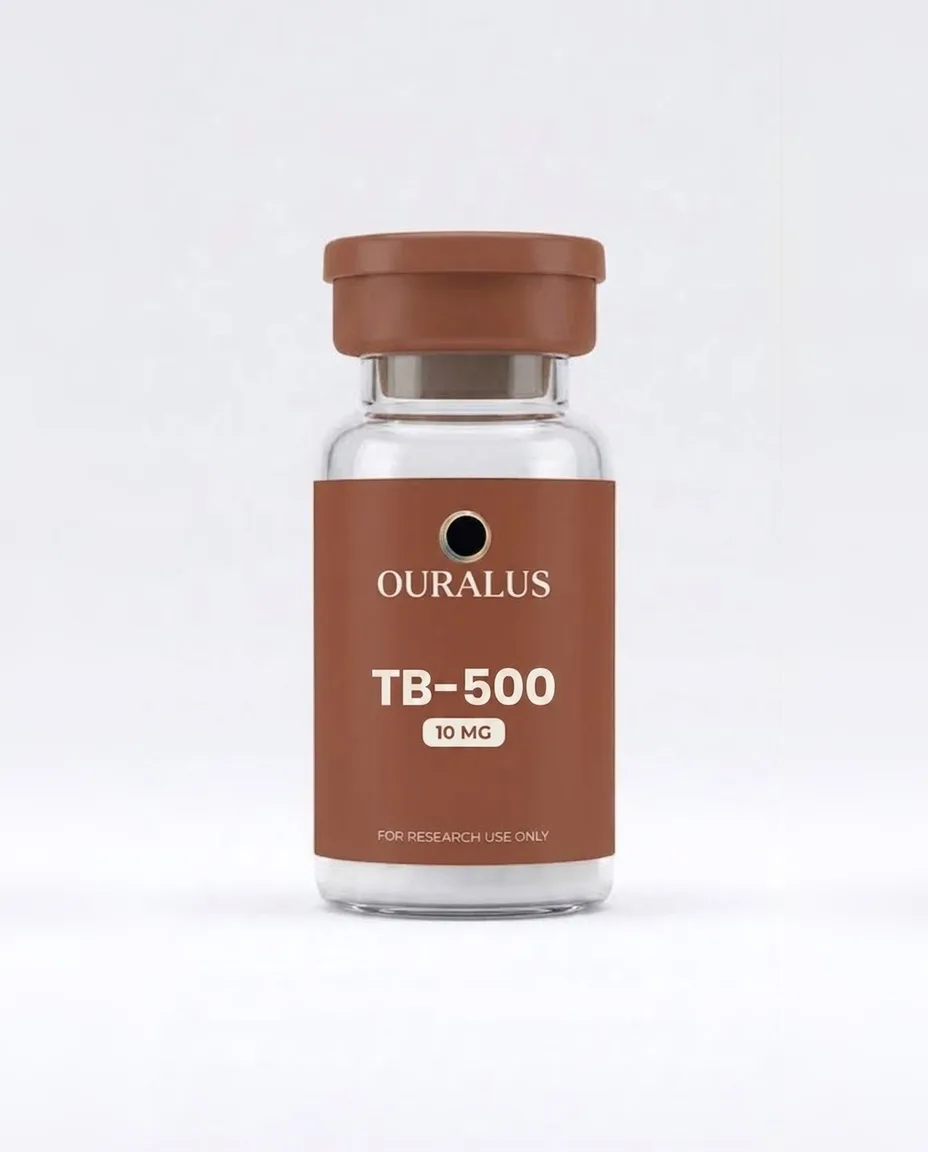
TB-500
TB-500 is the seven-residue fragment studied within the beta-thymosin literature, where the reported endpoints are actin binding and extracellular-matrix remodelling.1285225826006229
Study material
Cell preparations and rodent models, plus review-level surveys of the beta-thymosin family.1749524820536447
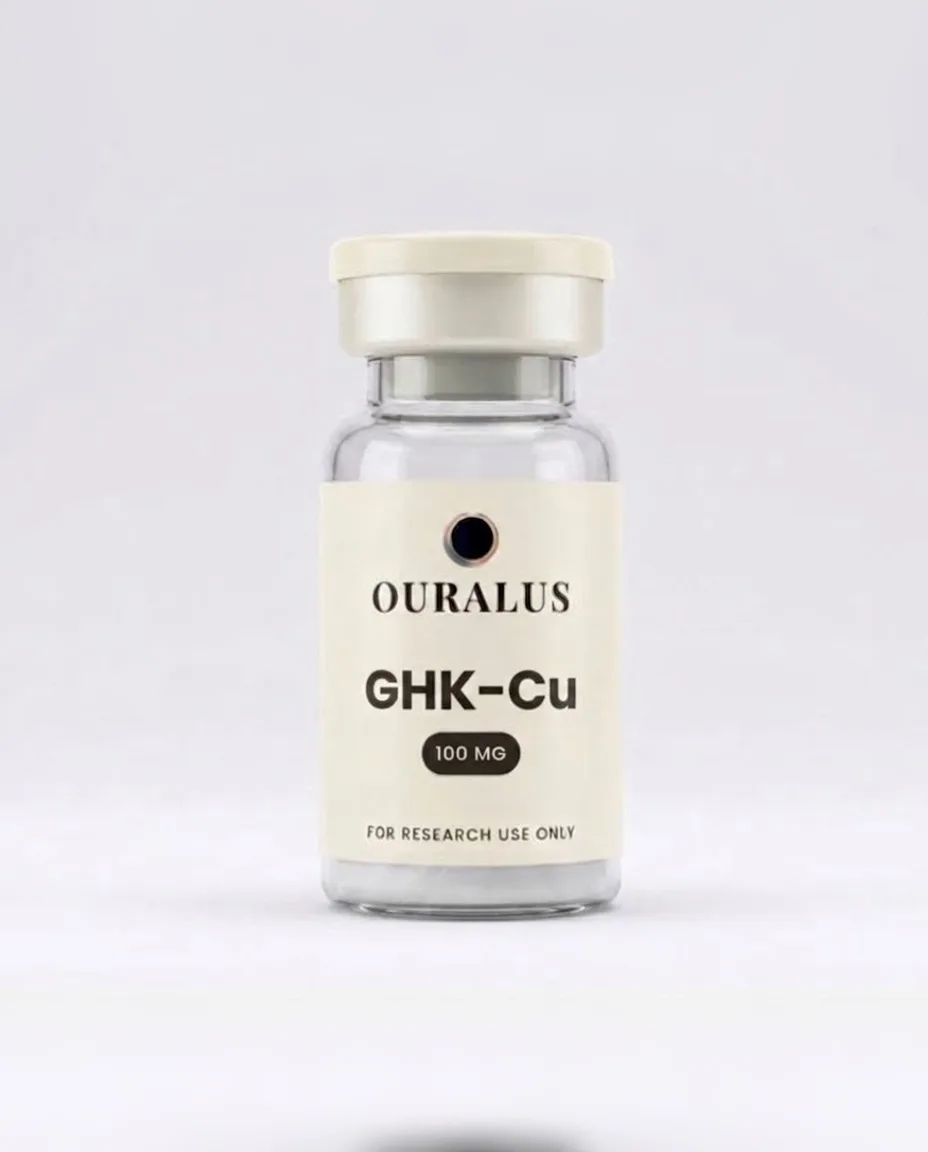
GHK-Cu
GHK-Cu is examined as a copper(II)-coordinating tripeptide in extracellular-matrix models, with reported endpoints in collagen and matrix-protein expression.1864422537062921
Study material
Fibroblast and keratinocyte culture predominates, with rodent models appearing in the oxidative-stress work.2623673038879894
Purity, and how to check both yourself
Purity here is a measurement, not a position. Each lot currently shipping was analysed by an independent laboratory by HPLC for identity. We do not test our own material. Both certificates state an assayed purity figure.
| Measurement | TB-500 | GHK-Cu |
|---|---|---|
| Assayed purity, current lot | 99.402% | 99.959% |
| Testing laboratory | Janoshik | Janoshik |
| Lot | White | Not stated on report |
| Verify key | PDXV8UJEL1G4 | FFU7FYYJNJ9V |
Enter either verify key at janoshik.com/verify and the laboratory returns the report it issued for that batch. You are confirming the result with them, not with us. Full certificates: TB-500 · GHK-Cu
We report HPLC identity and assayed purity only. We do not run heavy-metal, microbial, endotoxin, or sterility analysis, and we do not claim it anywhere on this site.
Cited literature
- Thymosin beta 4 interactionsBubb MR · Vitamins and Hormones · 2003PMID 12852258 ↗
- Potential role of thymosin Beta 4 in liver fibrosisKim J, et al. · International Journal of Molecular Sciences · 2015PMID 26006229 ↗
- The human tri-peptide GHK and tissue remodelingPickart L · Journal of Biomaterials Science, Polymer Edition · 2008PMID 18644225 ↗
- Synergy of GHK-Cu and hyaluronic acid on collagen IV upregulation via fibroblast and ex-vivo skin testsJiang F, et al. · Journal of Cosmetic Dermatology · 2023PMID 37062921 ↗
- The beta-thymosin enigmaSun HQ, et al. · Annals of the New York Academy of Sciences · 2007PMID 17495248 ↗
- Thymosin beta4 and its posttranslational modificationsHannappel E · Annals of the New York Academy of Sciences · 2010PMID 20536447 ↗
- GHK Peptide as a Natural Modulator of Multiple Cellular Pathways in Skin RegenerationPickart L, Vasquez-Soltero JM, Margolina A · BioMed Research International · 2015PMID 26236730 ↗
- The glycyl-l-histidyl-l-lysine-Cu2+ tripeptide complex attenuates lung inflammation and fibrosis in silicosis by targeting peroxiredoxin 6Bian Y, et al. · Redox Biology · 2024PMID 38879894 ↗
Research-literature characterization, provided for research context only. For laboratory research use only. Not for human consumption.