
NAD+: identity, research literature, and verified purity
assayed by HPLC at Janoshik
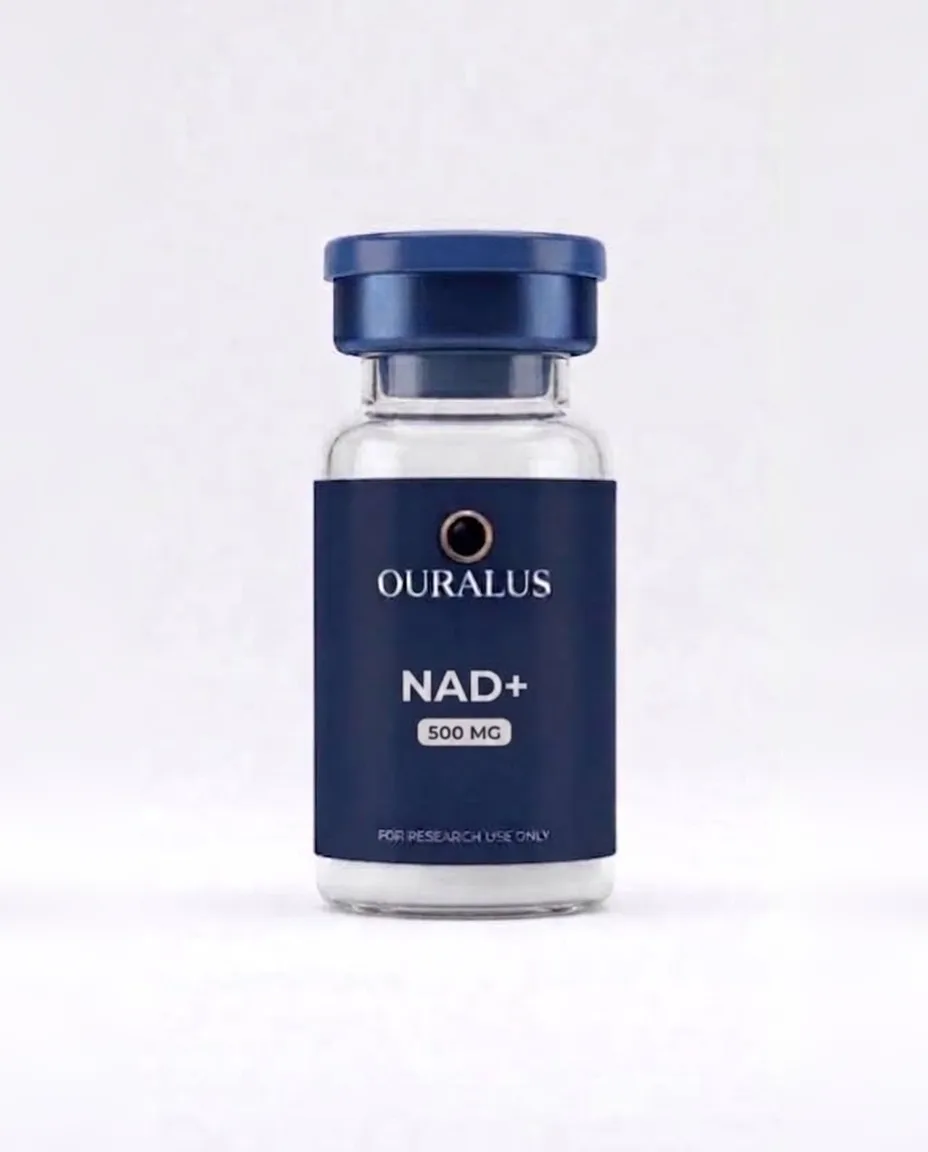
The lot currently shipping assayed by third-party HPLC at Janoshik, and that certificate is published here with a key you can confirm with the laboratory yourself.
Identity and registry data
- CAS
- 53-84-9
- Molecular formula
- C21H27N7O14P2
- Molar mass
- 663.43 g/mol
- PubChem CID
- 5892
- UNII
- 0U46U6E8UK
Also known asNadide · beta-NAD · Coenzyme I · Diphosphopyridine nucleotide · Nicotinamide adenine dinucleotide
What the research literature covers
The characterization below reflects published research literature only. It describes what that literature examines; it is not a statement about use in people. NAD+ is investigational research material and is not an approved product.
NAD+ (nicotinamide adenine dinucleotide, oxidized form) is a naturally occurring dinucleotide coenzyme, supplied as a lyophilized powder for laboratory research use only.
It is a central redox cofactor studied extensively in mitochondrial-biology, metabolic-signalling, and cellular-senescence research. Salt forms such as the disodium salt differ in molecular weight from the free-acid value listed here.
Reported mechanism · literatureIn biochemistry NAD+ functions as a redox coenzyme that shuttles electrons via the NAD+/NADH couple, and is widely used as a defined research reagent.
- Mitochondrial biology
- Metabolic signalling
- Cellular senescence
NAD+ and Epitalon, side by side
These two are frequently discussed together. They are different molecules, with different sequences and different molar masses. The table states what each one is and what its current lot assayed. It does not say which is preferable for any purpose, and nothing on this site does.
| Property | NAD+ | Epitalon |
|---|---|---|
| What it is | Dinucleotide redox coenzyme — not a peptide | Synthetic 4–amino-acid peptide (tetrapeptide) |
| CAS | 53-84-9 | 307297-39-8 |
| Molar mass | 663.43 g/mol | 390.35 g/mol |
| Research areas in the literature | Mitochondrial biology, Metabolic signalling, Cellular senescence | Telomere biology, Cellular senescence |
| Verify key | VC63IEZ7H6YF | 4371ZNKCLG9H |
NAD+ and Epitalon, in full → · Full Epitalon reference →
Also compared withMOTS-c
Purity, and how to check it yourself
Purity here is a measurement, not a position. The lot currently shipping was analysed by Janoshik, an independent laboratory, by HPLC for identity and assayed purity. We do not test our own material.
- Lot
- Green
- Analysed
- December 5, 2025
- Assayed purity
- Testing laboratory
- Janoshik
- Verify key
- VC63IEZ7H6YF
Enter that key at janoshik.com/verify and the laboratory returns the report it issued for this batch. You are confirming the result with them, not with us. The full certificate is published as a PDF on the NAD+ certificate page.
We report HPLC identity and assayed purity only. We do not run heavy-metal, microbial, endotoxin, or sterility analysis, and we do not claim it anywhere on this site.
Handling and stability
- Lyophilized
- −20°C · sealed; protect from light + moisture
Questions
What is NAD+?
NAD+ (nicotinamide adenine dinucleotide, oxidized form) is a naturally occurring dinucleotide coenzyme and a central redox cofactor. Ouralus supplies it as a lyophilized powder for laboratory research use only.
What is the molecular formula of NAD+?
The free-acid form is C21H27N7O14P2 (molar mass ≈ 663.4 g/mol; PubChem CID 5892, CAS 53-84-9). Salt forms such as the disodium salt have a different molecular weight.
Is NAD+ third-party tested?
Yes. The lot currently shipping was analysed by Janoshik, an independent laboratory, by HPLC for identity and assayed purity, and assayed undefined. The certificate carries verify key VC63IEZ7H6YF, which you can confirm directly at janoshik.com/verify.
Is NAD+ an approved product?
No. NAD+ is supplied strictly as a research chemical for laboratory research use only. It is not a drug, not a supplement, and not a food, and it is not for human or animal consumption.
Questions answered from the cited research
Selected literature
- Characterization of the Nicotinamide Adenine Dinucleotide Biosynthesis Pathway and Regulatory Mechanisms in Streptococcus mutansYu H, et al. · The FASEB Journal · 2025PMID 40693873 ↗
Research-literature characterization, provided for research context only. For laboratory research use only. Not for human consumption.