
Epitalon and NAD+: what the research literature examines
Epitalon and NAD+ are different molecules with different sequences and different molar masses. This page sets out what each published literature examines, in what study material, and what each current lot assayed. It does not say which is preferable for any purpose, and nothing on this site does.
Identity, side by side
| Property | Epitalon | NAD+ |
|---|---|---|
| What it is | Synthetic 4–amino-acid peptide (tetrapeptide) | Dinucleotide redox coenzyme — not a peptide |
| CAS | 307297-39-8 | 53-84-9 |
| Molecular formula | C14H22N4O9 | C21H27N7O14P2 |
| Molar mass | 390.35 g/mol | 663.43 g/mol |
| Research areas in the literature | Telomere biology, Cellular senescence | Mitochondrial biology, Metabolic signalling, Cellular senescence |
Shared research areas: Cellular senescence. A shared area means the two are examined in the same field of study — not that they are examined through the same mechanism, and not that findings for one transfer to the other.
What each literature examines
The characterization below reflects published research literature only. It describes what that literature examines; it is not a statement about use in people. Both compounds are investigational research material and neither is an approved product.
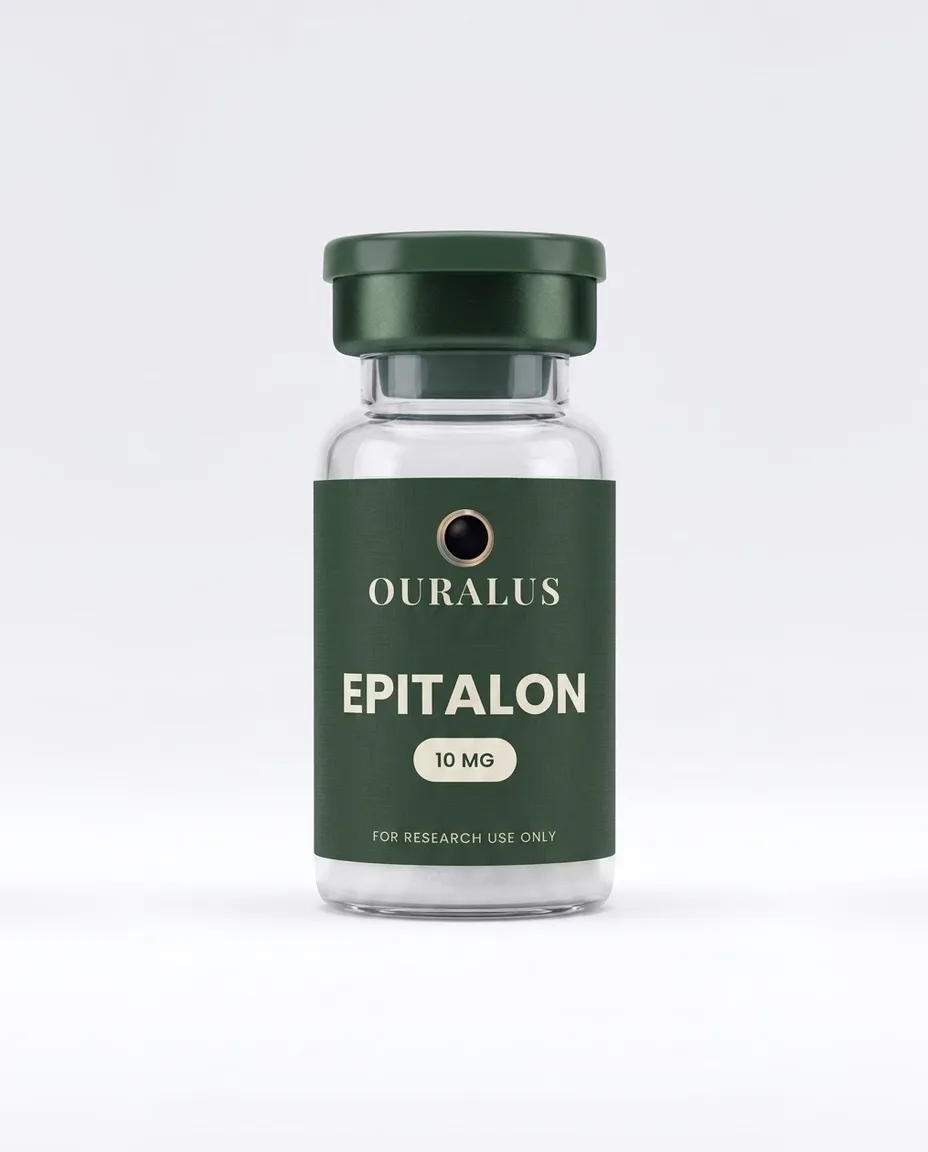
Epitalon
Epitalon is a four-residue peptide examined in telomere-biology and cellular-senescence models, with reported endpoints in telomerase gene and protein expression.3201920440141333
Study material
Cell culture, with a review surveying the wider pineal-peptide literature the compound sits in.3201920440141333
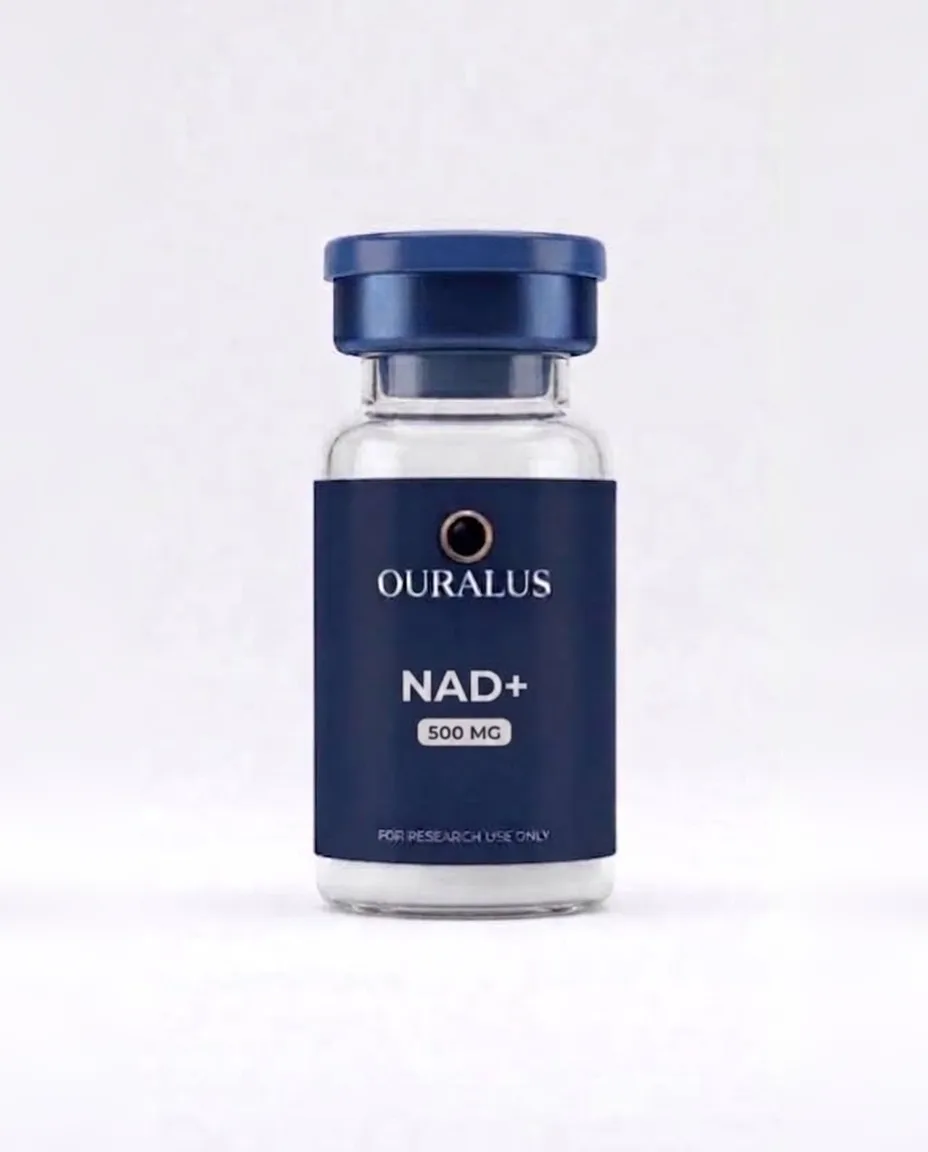
Purity, and how to check both yourself
Purity here is a measurement, not a position. Each lot currently shipping was analysed by an independent laboratory by HPLC for identity. We do not test our own material.
No assayed purity figure is published for NAD+, so none is claimed here and no purity row appears below for it. Its certificate is published; the purity figure is not, and an absent row never implies a value.
| Measurement | Epitalon | NAD+ |
|---|---|---|
| Testing laboratory | Janoshik | Janoshik |
| Lot | Green | Green |
| Verify key | 4371ZNKCLG9H | VC63IEZ7H6YF |
Enter either verify key at janoshik.com/verify and the laboratory returns the report it issued for that batch. You are confirming the result with them, not with us. Full certificates: Epitalon · NAD+
We report HPLC identity and assayed purity only. We do not run heavy-metal, microbial, endotoxin, or sterility analysis, and we do not claim it anywhere on this site.
Cited literature
- AEDG Peptide (Epitalon) Stimulates Gene Expression and Protein Synthesis during Neurogenesis: Possible Epigenetic MechanismKhavinson V, et al. · Molecules · 2020PMID 32019204 ↗
- Overview of Epitalon — Highly Bioactive Pineal Tetrapeptide with Promising PropertiesAraj SK, et al. · International Journal of Molecular Sciences · 2025PMID 40141333 ↗
- Characterization of the Nicotinamide Adenine Dinucleotide Biosynthesis Pathway and Regulatory Mechanisms in Streptococcus mutansYu H, et al. · The FASEB Journal · 2025PMID 40693873 ↗
Research-literature characterization, provided for research context only. For laboratory research use only. Not for human consumption.