
MOTS-c and NAD+: what the research literature examines
MOTS-c and NAD+ are different molecules with different sequences and different molar masses. This page sets out what each published literature examines, in what study material, and what each current lot assayed. It does not say which is preferable for any purpose, and nothing on this site does.
Identity, side by side
| Property | MOTS-c | NAD+ |
|---|---|---|
| What it is | Synthetic 16–amino-acid peptide (hexadecapeptide) | Dinucleotide redox coenzyme — not a peptide |
| CAS | 1627580-64-6 | 53-84-9 |
| Molecular formula | C101H152N28O22S2 | C21H27N7O14P2 |
| Molar mass | 2174.6 g/mol | 663.43 g/mol |
| Research areas in the literature | Mitochondrial biology, Metabolic signalling | Mitochondrial biology, Metabolic signalling, Cellular senescence |
Shared research areas: Mitochondrial biology, Metabolic signalling. A shared area means the two are examined in the same field of study — not that they are examined through the same mechanism, and not that findings for one transfer to the other.
What each literature examines
The characterization below reflects published research literature only. It describes what that literature examines; it is not a statement about use in people. Both compounds are investigational research material and neither is an approved product.
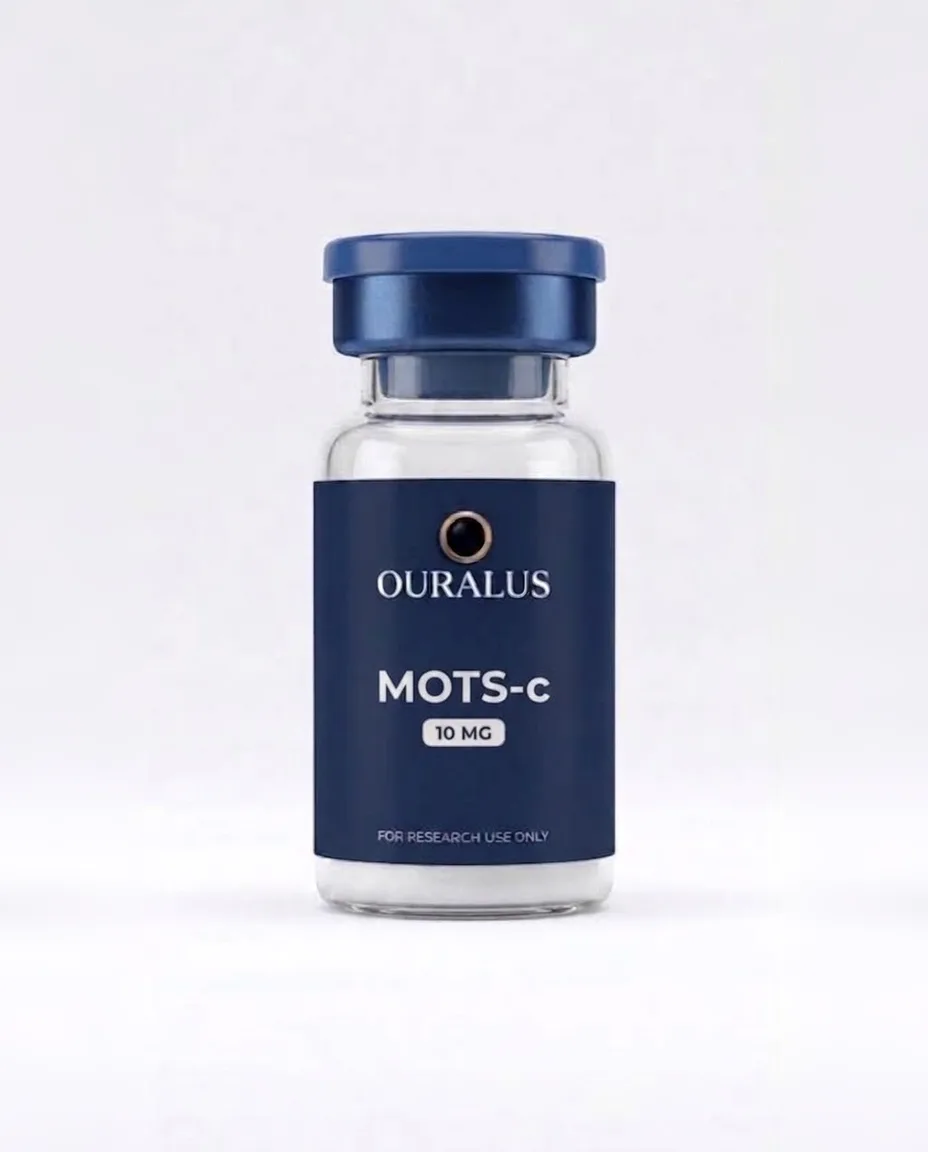
MOTS-c
MOTS-c is described as a peptide encoded within mitochondrial DNA, examined in metabolic-signalling models with reported endpoints in AMPK-pathway activity and glucose handling.2573845925738453
Study material
Mouse models and cell preparations — both founding reports are rodent and in-vitro.2573845925738453
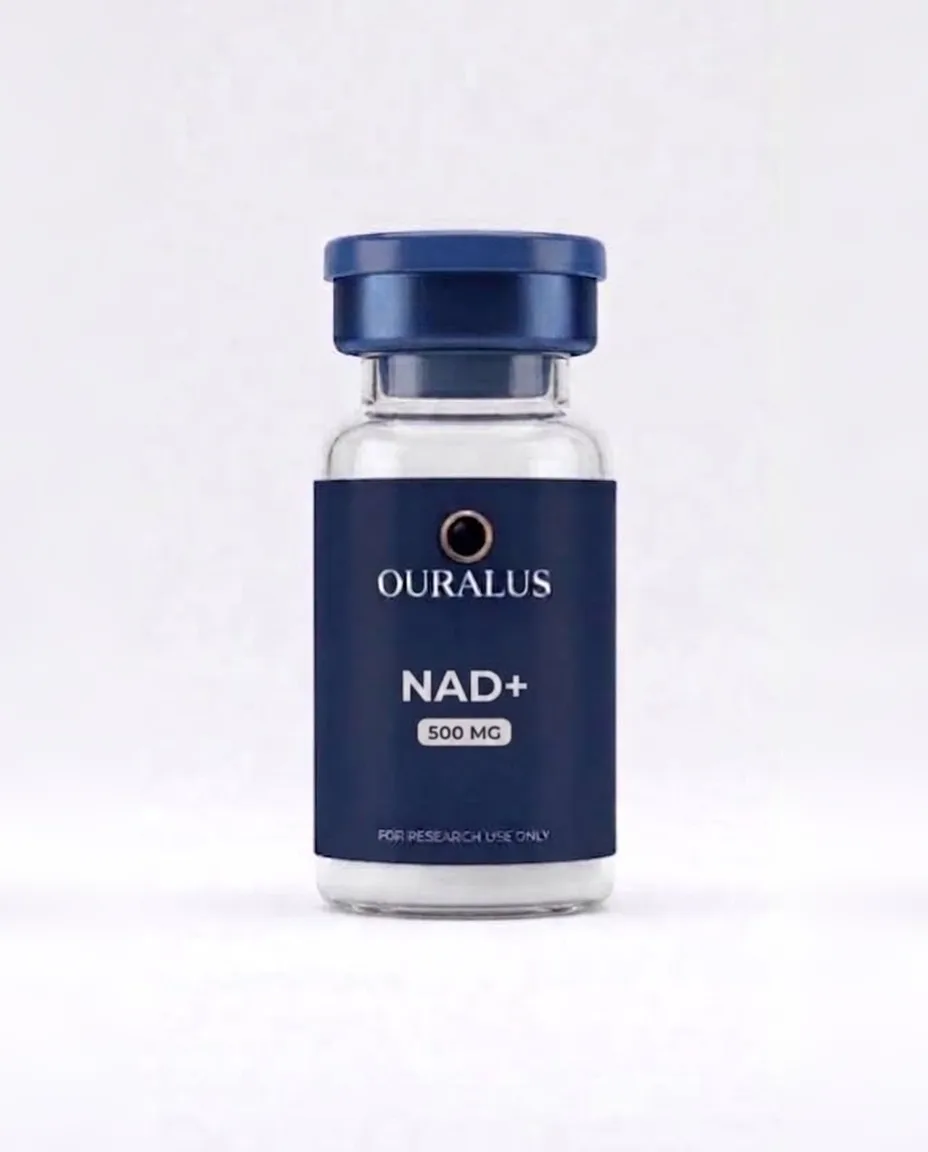
Purity, and how to check both yourself
Purity here is a measurement, not a position. Each lot currently shipping was analysed by an independent laboratory by HPLC for identity. We do not test our own material.
No assayed purity figure is published for NAD+, so none is claimed here and no purity row appears below for it. Its certificate is published; the purity figure is not, and an absent row never implies a value.
| Measurement | MOTS-c | NAD+ |
|---|---|---|
| Testing laboratory | Janoshik | Janoshik |
| Lot | white cap | Green |
| Verify key | X9QFDRJ85UYG | VC63IEZ7H6YF |
Enter either verify key at janoshik.com/verify and the laboratory returns the report it issued for that batch. You are confirming the result with them, not with us. Full certificates: MOTS-c · NAD+
We report HPLC identity and assayed purity only. We do not run heavy-metal, microbial, endotoxin, or sterility analysis, and we do not claim it anywhere on this site.
Cited literature
- The mitochondrial-derived peptide MOTS-c promotes metabolic homeostasis and reduces obesity and insulin resistanceLee C, et al. · Cell Metabolism · 2015PMID 25738459 ↗
- A mitochondrially encoded hormone ameliorates obesity and insulin resistanceZarse K, Ristow M · Cell Metabolism · 2015PMID 25738453 ↗
- Characterization of the Nicotinamide Adenine Dinucleotide Biosynthesis Pathway and Regulatory Mechanisms in Streptococcus mutansYu H, et al. · The FASEB Journal · 2025PMID 40693873 ↗
Research-literature characterization, provided for research context only. For laboratory research use only. Not for human consumption.