
BPC-157 and TB-500: what the research literature examines
BPC-157 and TB-500 are different molecules with different sequences and different molar masses. This page sets out what each published literature examines, in what study material, and what each current lot assayed. It does not say which is preferable for any purpose, and nothing on this site does.
Identity, side by side
| Property | BPC-157 | TB-500 |
|---|---|---|
| What it is | Synthetic 15–amino-acid peptide (pentadecapeptide) | Synthetic N-acetylated 7–amino-acid fragment |
| Sequence | Gly-Glu-Pro-Pro-Pro-Gly-Lys-Pro-Ala-Asp-Asp-Ala-Gly-Leu-Val | Ac-Leu-Lys-Lys-Thr-Glu-Thr-Gln-OH |
| CAS | 137525-51-0 | 885340-08-9 |
| Molecular formula | C62H98N16O22 | C38H68N10O14 |
| Molar mass | 1419.5 g/mol | 889 g/mol |
| Research areas in the literature | Tissue repair models, Angiogenesis, Cytoprotection, Extracellular matrix | Tissue repair models, Extracellular matrix |
Shared research areas: Tissue repair models, Extracellular matrix. A shared area means the two are examined in the same field of study — not that they are examined through the same mechanism, and not that findings for one transfer to the other.
What each literature examines
The characterization below reflects published research literature only. It describes what that literature examines; it is not a statement about use in people. Both compounds are investigational research material and neither is an approved product.
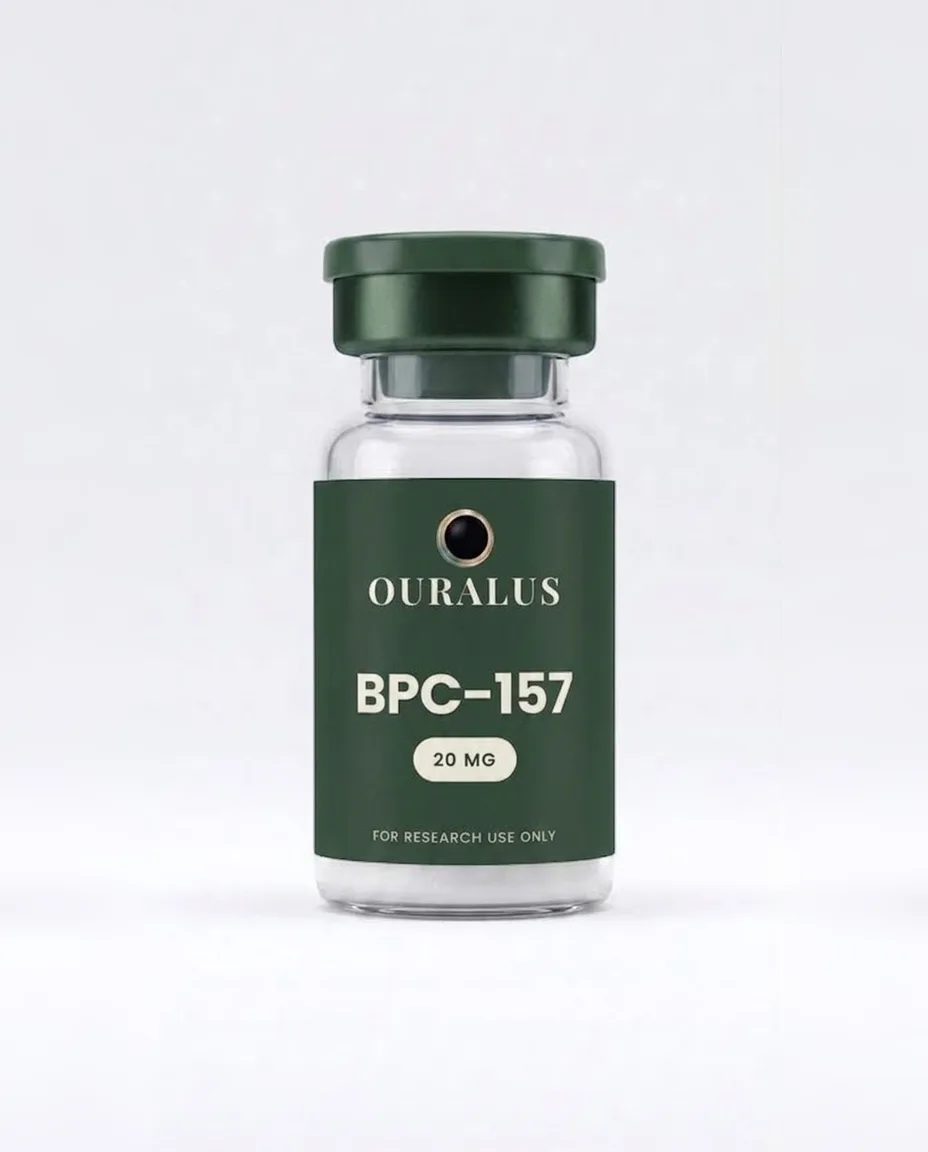
BPC-157
Published BPC-157 work is concentrated in tissue-repair models, where the reported endpoints are structural and biochemical — connective-tissue preparations, and markers of the nitric-oxide system.2103067223755725
Study material
Rat and mouse preparations, with cell assays alongside them. Every record indexed here is preclinical.2103067230915550
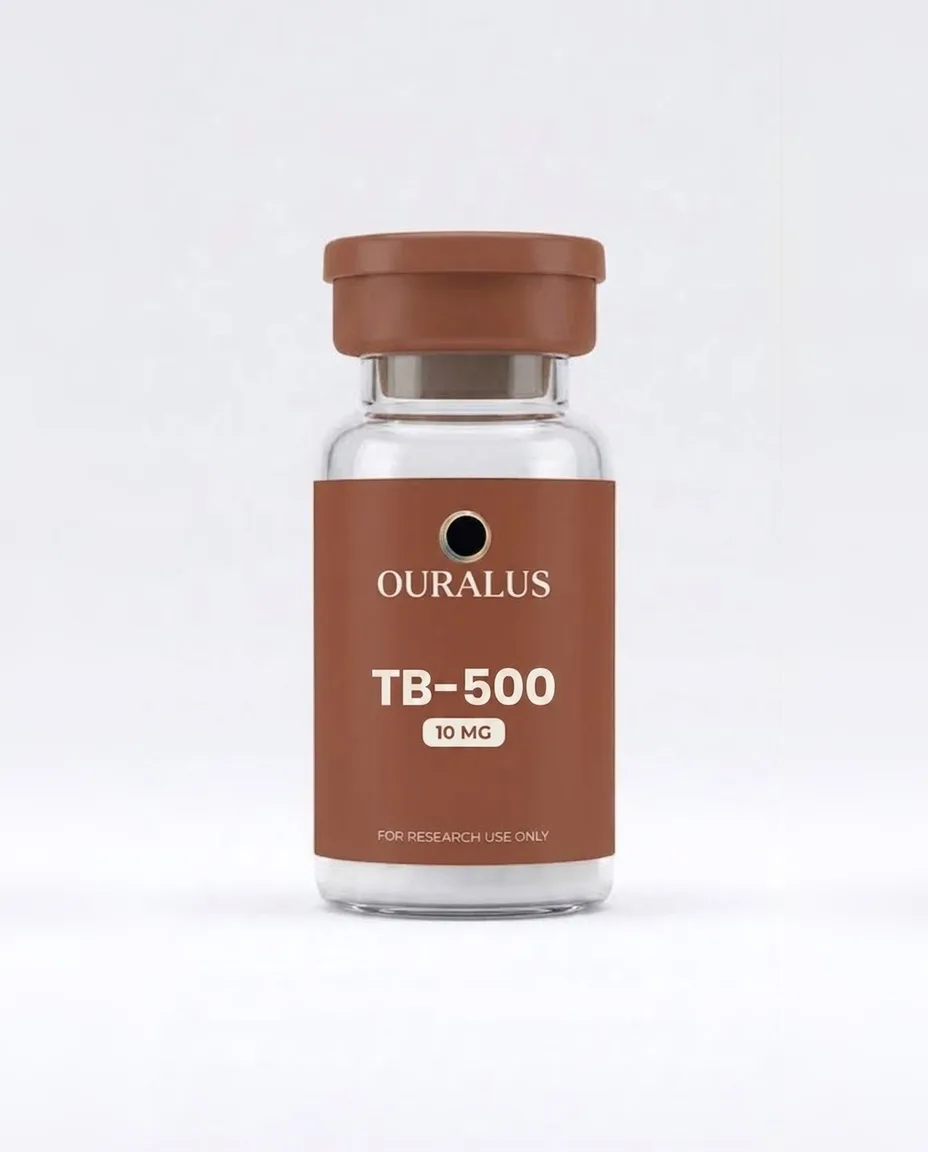
TB-500
Published TB-500 work sits inside the beta-thymosin literature, where the reported endpoints are actin binding and the structural biology of the thymosin beta-4 family.1285225817468232
Study material
Cell preparations and rodent models, with review-level surveys of the beta-thymosin family making up a large share of the record.1749524820536447
Purity, and how to check both yourself
Purity here is a measurement, not a position. Each lot currently shipping was analysed by an independent laboratory by HPLC for identity. We do not test our own material. Both certificates state an assayed purity figure.
| Measurement | BPC-157 | TB-500 |
|---|---|---|
| Assayed purity, current lot | 99.497% | 99.402% |
| Testing laboratory | Janoshik | Janoshik |
| Lot | Blue Transparent Cap / Silver Crimp | White |
| Verify key | RMAIPH836PXJ | PDXV8UJEL1G4 |
Enter either verify key at janoshik.com/verify and the laboratory returns the report it issued for that batch. You are confirming the result with them, not with us. Full certificates: BPC-157 · TB-500
We report HPLC identity and assayed purity only. We do not run heavy-metal, microbial, endotoxin, or sterility analysis, and we do not claim it anywhere on this site.
Cited literature
- The promoting effect of pentadecapeptide BPC 157 on tendon healing involves tendon outgrowth, cell survival, and cell migrationChang CH, et al. · Journal of Applied Physiology · 2011PMID 21030672 ↗
- Stable gastric pentadecapeptide BPC 157-NO-system relationSikiric P, et al. · Current Pharmaceutical Design · 2014PMID 23755725 ↗
- Thymosin beta 4 interactionsBubb MR · Vitamins and Hormones · 2003PMID 12852258 ↗
- beta-ThymosinsHannappel E · Annals of the New York Academy of Sciences · 2007PMID 17468232 ↗
- Gastric pentadecapeptide body protection compound BPC 157 and its role in accelerating musculoskeletal soft tissue healingGwyer D, et al. · Cell and Tissue Research · 2019PMID 30915550 ↗
- The beta-thymosin enigmaSun HQ, et al. · Annals of the New York Academy of Sciences · 2007PMID 17495248 ↗
- Thymosin beta4 and its posttranslational modificationsHannappel E · Annals of the New York Academy of Sciences · 2010PMID 20536447 ↗
Research-literature characterization, provided for research context only. For laboratory research use only. Not for human consumption.